I am selling affordable abstract expressionism art and an invitation to view art at my studio. Here are a handful of recent pieces. Prices from $75 - $400.
Summer 2026 24"x24" Acrylics, gouache on plywood. $400

I am selling affordable abstract expressionism art and an invitation to view art at my studio. Here are a handful of recent pieces. Prices from $75 - $400.

Libraries
are Essential
Carla Hayden, the first woman and the first African
American to serve as the Librarian of Congress was sacked by Donald Trump on Thursday
night, May 8th this year. His press secretary, Karoline Leavitt,
said that her continued service did not fit the needs of the American people,
did not serve the interests of the American taxpayer, and the President is well
within his rights to fire her.
In published remarks in June, Ms. Hayden said she got a
short email from Deputy Director of Presidential Personnel, Trent Morse: “On
behalf of President Donald J. Trump, I am writing to inform you that your
position as the Librarian of Congress is terminated effective immediately.
Thank you for your service.”
No contact in person before or after, no phone call,
just one email. Trump’s former personal lawyer, Todd Blanche, is now in charge
of the facility.
In an editorial by author George Saunders on May 13th,
he tell us that one of the things he and Dr. Hayden bonded over was the idea
that knowledge is power; that in a democracy, the more we know, the better we
are.
Firing the Librarian of Congress was alarming. Are our
libraries under threat from this administration? Or was it just another
cultural makeover, as when Trump fired Colleen Shogan, Archivist of the United
States in February. Secretary of State Marco Rubio was put in charge as Acting
Archivist.
Ms. Shogan stated that no cause or reason was cited. “It
has been an honor serving as the 11th Archivist of the United
States. I have zero regrets – I absolutely did my best every day for the
National Archives and the American people.”
In 1949, the United Nations Educational, Scientific and
Cultural Organization (UNESCO), published a Public Library Manifesto: “The
library is a prerequisite to let citizens make use of their right to
information and freedom of speech. Free access to information is necessary in a
democratic society, for open debate and creation of public opinion.”
When we read, we gain access to information and
knowledge and culture and history and art. In person or online, librarians make
suggestions about what we might want to read, based on asking us questions, and
by pointing us to the material and by telling us how we can search for
ourselves.
Caring and helping are normal human instincts. Most
everyone has strong feelings and memories associated with the libraries they
visited and the help they received.
Susan Orlean wrote The
Library Book, and in it she says that a library is a place where you feel
part of a conversation that has gone on for hundreds and hundreds of years,
even when you’re alone. And she concludes by stating that all the things that
are wrong in the world seem conquered by a library’s simple unspoken promise:
Here I am, please tell me your story; here is my story, please listen.
James Baldwin said: “I went at least three or four times
a week (135th Street branch of the New York Public Library) and I
read everything there. I mean, every single book in that library. In some blind
and instinctive way, I knew that what was happening in those books was also
happening all around me. And I was trying to make a connection between those
books and the life I saw and the life I lived.”
Ursula Le Guin: “A library is a focal point, a sacred
place to a community, and its sacredness is its accessibility, its publicness.
It’s everybody’s place. I remember certain libraries, vividly and joyfully, as
my libraries --- elements of the best of my life.”
Ray Bradbury: “Libraries raised me. I don’t believe in
colleges and universities. I believe in libraries because most students don’t
have any money. When I graduated from high school, it was during the Depression
and we had no money. I couldn’t go to college, so I went to the library three
days a week for 10 years.”
There are two national groups that advocate for
libraries: the Public Library Association (PLA) and the American Library
Association (ALA). Island County libraries are part of the Sno-Isle Library system
which has 23 branches, the Library on Wheels, and Express Lockers at three of
their libraries.
In support of the Sno-Isle Library branches, there are
sixteen Friends of the Library chapters. These are nonprofit volunteer
organizations that bring together people who support and promote the services
and programs of their respective libraries. Money raised by these groups goes
toward programming for all ages, summer reading programs for children and
teens, library capital improvements, special project funding and more. This
link provides contact information for the Friends of the Library groups.
https://www.sno-isle.org/friends-of-the-library/
The Sno-Isle website lists their Vision, Mission, and
Values. Their mission is to engage and inspire our communities through
equitable access to knowledge and resources. Their values are straightforward:
Community, Equity, Inclusion, Welcoming, Learning, and Respect. I believe the
majority of Americans embrace and live these values.

My Antonia, by Willa Cather
(If you haven’t read this book, know that spoilers
abound in this overview.)
I find it rare, when I am reading, to be gripped by
feelings and longings I don’t understand. Non-fiction and memoirs are where I
usually hang out. Sometimes good fiction can plumb the depths of whatever my
unconscious is holding onto. My Antonia,
by Willa Cather (1873-1947), was published in 1918, and it caught me unawares.
A description: “All those fall afternoons were the same,
but I never got used to them. As far as we could see, the miles of copper-red
grass were drenched in sunlight that was stronger and fiercer than at any other
time of the day. The blond cornfields were red gold, the haystacks turned rosy
and threw long shadows. The whole prairie was like the bush that burned with
fire and was not consumed.” The setting is southern Nebraska, near Red Cloud.
An evocative writer makes you stop reading and think
about what you are imagining and feeling. Willa Cather developed her talent
through years of hard work and determination. In 1896 she got a position in
Pittsburgh at a women’s magazine: Home
Monthly. She wrote short stories, poetry, articles, and continued working
as a journalist for other publications. She also taught at Pittsburgh’s Central
High School for a year, and taught English and Latin at Allegheny High School.
She published her first book of poetry in 1903, followed by a collection of
short stories in 1905. She joined McClure’s
Magazine as an editor and her first novel (Alexander’s Bridge) was serialized by McClure’s in 1912.
“…Cather learned to create on her pages a new-found sense of intimacy, one borne of the relation between intimates. This is first really seen in My Antonia.”
(From the
section “Emerging Writer, 1914-1922”, Willa
Cather Center website: https://www.willacather.org/about/willa-cather-biography.)
Kathleen Norris wrote a Foreword to the 1995 paperback edition of My Antonia. She says: “Intent on telling the truths of a particular time and place, she made her own prose as spare as the land about which she was writing, and became a pioneer in American fiction.” Norris mentions that Cather had the great good fortune to have lived among the first generation of white settlers in 1880s Nebraska. In her Foreword, Norris also states: “In many ways the world of My Antonia is still with us, a neglected but significant part of America.”
Ms. Norris grew up in Lemmon, North Dakota, a
small town near the southern border of that state. I grew up in Minnesota and immigrants, starting in the 1860s, moved into the state from Europe and Great
Britain. Many settled on farmland, thanks to the Homestead Act of 1862 and the
liberation the railroads provided after the Civil War. They usually banded
together and were suspicious of others, even as they needed help outside their
own enclaves.
But it is Antonia who left a lasting impression on Willa
Cather. Cather writes: “Antonia had always been one to leave images in the mind
that did not fade – that grew stronger with time…she lent herself to immemorial
human attitudes which we recognize by instinct as universal and true…but she
still had that something which fires the imagination, could still stop one’s
breath for a moment by a look or gesture that somehow revealed the meaning in
common things…All the strong things of her heart came out in her body, that had
been so tireless in serving generous emotions.”
Someone like Antonia often leaves us with an intense
yearning, a need to be near them, to feel their essence. Attraction to another
person seems to work on a number of simultaneous levels. It can be visual, physical,
appreciation of speech and style, gestures, even sexual attraction can be part of
it. Whatever their special quality, it pulls us to them by proximity or thought. Why is
that?
PBS American Masters
did a review of her life. In it, David McCullough speaks about the
suicide the Grandfather commits: “Kills himself, commits suicide. Can’t take it
– some people are crushed by it. It will either make you or break you. That’s a
very American theme...And what really counts in the long run, is the feeling it leaves with you – that feeling that you have about the book, My Antonia. Ten years after you’ve read
it, you can still feel that. Why? Because of the transforming magic of art.
Because Willa Cather took that story and made it immortal.”
PBS Documentary: https://www.youtube.com/watch?v=_1AJDk9QCkk&t=3343s
For several days, I have wanted to write just one more
thing about Willa Cather and this novel. What I settled on was something Willa
Cather wrote in her Introduction to the book in 1918. She is taking a long
train journey with her friend, Jim, the narrator of the book.
“…our talk kept returning to a central figure, a
Bohemian girl whom we had known long ago and whom both of us admired. More than
any other person we remembered, this girl seemed to mean to us the country, the
conditions, the whole adventure of our childhood. To call her name was to call
up pictures of people and places, to set a quiet drama going in one’s brain.”

The
Demon of Unrest by Erik Larson, 2024 Large Print edition
I have never felt strongly drawn to reading about the
United States Civil War during the 1860s. I watched the Ken Burns’ Civil War series
on PBS and thrilled to the history he and his team brought to life. Books about
the American Civil War abound, and as best-selling author Erik Larson says in
an Introduction to his non-fiction book, The
Demon of Unrest: “I suspect your dread will be all the more pronounced in
light of today’s political discord….which has led some benighted Americans to
whisper once again of secession and civil war.” Even knowing the outcome, the
reader senses the attitudes and beliefs at play in the drama that led up to the
attack on Fort Sumter.
As Covid unfolded in early 2020, Erik Larson began to
wonder: “Exactly how did the Civil
War begin? What really happened at Fort Sumter?” Ordering a bound copy of: The War of the Rebellion: A Compilation of
the Official Records of the Union and Confederate Armies, Mr. Larson found
letters, telegrams, and reports that captured in vivid detail the march toward
fratricide. He had his narrative spine for the book. As pandemic restrictions
eased, he was able to visit the Charleston Historical Society, the Library of
Congress, and consulted other primary source material archives. Secondary
sources were also sought out and listed at the end of the book. Mr. Larson also
informs the reader: “This is a work of nonfiction. As always, anything between
quotation marks comes from some form of historical document…”
As I read the book, I consulted the April 1861 map of
Charleston Harbor provided in the front of the book, and Google maps of the
area for reference, as well as the National
Park Service website, Fort Sumter and Fort Moultrie: https://www.nps.gov/fosu/index.htm Any legitimate material consulted will aid the
reader’s imagination in picturing the events as they are described in the book.
First thing that struck me was that the 2020 United
States census shows a total United States population of 331,449,281.
The 1860 census lists 31,443,321
people in 33 states and 10 territories. Of this number, 3,953,760 were slaves and the states that had the greatest number
of slaves by percentage, were: South Carolina, 402,406 (57.2%); Mississippi,
436,631 (55.2%); Louisiana, 331,726 (46.9%); Alabama, 435,080 (45.1%); Georgia,
462,198 (43.7%); Florida, 61,745 (44%); North Carolina, 331,059 (33.4%);
Virginia, 490,865 (30.7%); Texas, 182,566 (30.2%); Arkansas, 111,115 (25.5%);
Tennessee, 275,710 (24.8%); Kentucky, 225,483 (19.5%), Maryland, 87,189
(12.7%). https://en.wikipedia.org/wiki/1860_United_States_census
According to Mr. Larson, there were 440 South Carolina
planters who each held one hundred or more enslaved Blacks within a single
district. They called themselves “the chivalry” and held jousting competitions
and gave themselves military titles and loved elaborate uniforms. Honor was
what they valued above all other human traits. When insulted, rage flared and
duels commenced. After the publication of Uncle Tom’s Cabin in 1852 (which sold
300,000 copies in the first three months), Mr. Larson writes: “In the North, it
confirmed readers’ worst imagining about the true nature of slavery; in the
South, it was spurned as yet another Northern failure to understand how slavery
benefited the enslaved themselves…”
After John Brown’s raid on the federal arsenal in
Harper’s Ferry in October of 1859, the South was galvanized. State militias
received new recruits, stockpiles of arms increased, vigilance committees were
formed. Charleston’s inhabitants were incensed and stepped up the aggressive
interrogation of outsiders and free Blacks. Traveling salesmen were required to
get a license. Lincoln’s election in November of 1860 intensified Southern
discontent about the Union.
Although shipping improved with steam power, and the telegraph speeded information access, these were early days for how people received information. Rumors and false assumptions were widespread. South Carolina kept trying for acceptance as a sovereign state, and Lincoln’s administration did not want to make any moves that could be seen as starting hostilities.
When Major Robert Anderson moved his men and their families, on his own initiative, from Fort Moultrie to Fort Johnson, no one suspected that the real destination was Fort Sumter.
As the sun set on December 26th, he informed his officers what he had secretly planned and set in motion. It took two trips on three boats to get his two companies of soldiers to Fort Sumter. Once there, the vessel with the forty-five women and children set off from Fort Moultrie for Fort Sumter. By morning, smoke was rising from the Fort Moultrie burning gun carriages, and the flag was missing. Everyone was safely within the walls of Fort Sumter.
Less than four months later, South Carolina
weapons opened fire on Fort Sumter on April 12th, 1861.
In “A Note To Readers” at the beginning of his book, Mr.
Larson tells us that while watching the Jan. 6th 2021 Capitol riots:
“I was appalled by the attack, but also riveted. I realized that the anxiety,
anger, and astonishment that I felt would certainly have been experienced in
1860-1861 by vast numbers of Americans…I invite you now to step into the past,
to that time of fear and dissension, and experience the passion, heroism, and
heartbreak – even humor – as if you were living in that day and did not know
how the story would end.”
If you would like to hear and watch Erik Larson talk
about The Demon of Unrest, click on
this link from the Library of Congress (Sept. 4th, 2024).
https://www.youtube.com/watch?v=yHQv5oQd3Zg&t=2294s

A
History of Reading by Steven Roger Fischer, 2019 revised edition
In an A.O. Scott essay about reading,
published in the N.Y. Times Book Review section on June 21st, 2023,
Mr. Scott mentioned Mr. Fischer’s book: A History of Reading. I ordered the
book from Sno-Isle Interlibrary Loan service. Mr. Fischer is a New Zealand
linguist and former Director of the Institute of Polynesian Languages and
Literatures in Auckland, New Zealand.
In his Introduction the author says: “What
music is to the spirit, reading is to the mind. Reading challenges, empowers,
bewitches, enriches.” In seven well-documented chapters, Mr. Fischer starts
with Egypt and runs us up to present time. He tells us that writing prioritizes
sound, and reading prioritizes meaning. And a key point to remember – for most
of written history, reading was reciting. If scribes bore false witness, they
were killed.
Reading represents freedom to me; the
freedom to absorb anything and the freedom to think about whatever has been
read. No one should be dictating what you
can read, right? But some have raised the issue about what is appropriate
reading material for those under a certain age. As a parent, I understand their
concern. Some parents want the libraries to withhold or move material they feel
is inappropriate for children. But I don’t like their approach. It’s
confrontational and draws a line in the sand. And they get to decide for us.
Many of us expect parents to make
suggestions and guide their children when it comes to choosing material. Some
parents take no responsibility for kids’ choices. Schools may provide
suggestions for age-appropriate reading lists. But when you expect school
boards to arbitrarily censor books, you are putting the responsibility for
choosing or discarding material in the hands of citizen-driven pressure groups.
Where is the freedom in that?
In
Mr. Scott’s essay he says that: “Reading liberates and torments us, enlightens
and bewilders us, makes and unmakes our social and solitary selves.”
Most of us are nodding our heads in
agreement. That book that looked so promising on the shelf, ended up sparking
feelings of disgust, anger, or maybe horror. Some books chime within us and spark feelings that we can scarcely understand. Scott makes the case that: “Reading,
like democracy or sexual desire, is an unmanageable, inherently destabilizing
force in human life.” Reading holds risk as well as promise. Reading gives us a
connection with another person and their imagination and opinions. The only
price we pay is our time. And yes, a risk is involved, but taking a risk
implies the freedom to do so. That is the crucial element: free to choose for
ourselves.
Mr. Fischer makes the same argument. “A
reader can choose to understand, react to, and interpret the author’s work
however the reader wants….No text, not even the most fundamental religious,
dictates to a reader. It is the reader who chooses how to react, what to think.
The wonder in reading is that the writer is never in control. It is the reader
who plays God.”
We choose to believe, cast aside, denounce or embrace the material we read. There’s freedom of speech, freedom of the press and there’s freedom of the mind.
(Steven Roger Fischer also wrote: A History of Writing in 2021. Also available via the Sno-Isle Library system using the Inter-Library Loan portal.)

Poverty, By America, by Matthew Desmond, Random House,
2023.
Mr. Desmond,
a professor of sociology at Princeton University, won a Pulitzer Prize for his earlier
2016 book, Evicted: Poverty and Profit in
the American City. It tells the stories of eight families who, in some
cases, had to spend 70% of their income for rent. And because women are paid
less than men and are often raising children, they pay a greater emotional
price.
Mr. Desmond grew
up pretty poor, in a small railroad town in Arizona, and after his family’s
home was lost to foreclosure, Poverty stressed and diminished them. He
wondered: is this how families dealt with hard times? Why should there be so
much hardship and desperation in this land of money?
Of his time later
living in Milwaukee, Mr. Desmond says, “I saw a level of poverty that was
incredibly cruel, and painful, and it drilled home in me that this is a morally
urgent issue; this isn’t just about people having enough money – this is about
pain, on top of eviction, on top of hunger, on top of incarceration, on top of,
just, death, really…” (C-Span “After
Words” March 29th, 2023).
Why is there
so much poverty in this incredibly wealthy nation? This question drove him to
write his book. And he also said: “This book is about how some lives are made
small, so that others may grow…There is an incredible amount of unnecessary
scarcity in this land of abundance…(and) this book is about why and how we can
finally abolish it. This is a call to rebalance our safety net. I want a
country that does a lot more to fight poverty than it does to guard fortunes.”
Mr. Desmond
cites a study that says: “…if the top 1% just paid the taxes they owed, not pay
more taxes, just stop evading taxes, we as a nation could raise an additional
175 billion. That’s more than enough money to re-establish the child tax
credit; that’s enough to double our investment in affordable housing and still
have money left over.” (Poverty, By
America by Matthew Desmond. April 18th, 2023 interview on
“Democracy Now.”)
How do we
subsidize the wealthy? One way is the $1.8 trillion per year supplied by tax
breaks – which is about double what we spend on the military. Wealthier people
get more of these tax breaks from the government, than poor people get. “We
could afford [to abolish poverty in America] if the richest among us took less
from the government, if we designed a welfare state to do less to subsidize
affluence and more to eradicate poverty.”
Another area
in which the poor are disadvantaged is in housing. Private equity swooped in
after the financial crisis of 2008 and bought up enormous amounts of housing,
reducing the overall inventory. Mr. Desmond believes that expanding opportunities for first time homeowners and
working families could ease some of this situation. But banks prefer to lend
money for expensive real estate rather than lower cost mortgages. There’s a much
larger financial return from financing big ticket homes and commercial projects.
Aid Left on the Table
There are a
lot of different kinds of financial aid for the poor, but it is often hard and
confusing to get the money. He says they are entitled to it, but in many cases
are not told how to apply for it. Mr. Desmond endorses increasing the
understanding needed to apply for aid, and cutting the red tape.
“We do a
very poor job in connecting families with programs that they need and
deserve…Most Americans want a higher minimum wage, most Americans think the
rich are not paying their fair share of taxes, most Americans, Democrat and
Republican, believe now that poverty isn’t caused by a moral failing – that
it’s caused by unfair circumstances.”
Concerns about Basic Needs
His 2023
book, tackles poverty in two sections: “Facts About Poverty in Your State” and “Join
the Fight.” Links are provided to learn more about the issues related to
poverty in the first section, and lists of organizations, both on a national
and state level, that advocate for change are featured in the second. Mr.
Desmond is passionate about what he has learned and argues that we may be
ignorant of how poverty is allowed to exist in America, but that we can change
our awareness and do something concrete.
https://endpovertyusa.org/
In his
epilogue, Mr. Desmond says that poverty will be abolished in America only when
a mass movement stirs. He believes that all of us “…can learn from, support,
and join movements led by those who have intimate knowledge of poverty’s many
slights and humiliations... mass movements are composed of scores of people
finding their own way to pitch in.”
What I hear
from Island County residents is this: I have just enough for myself and my family.
Movements for change creep along at glacial speed and the folks who might
create some change, aren’t compelled to do what we ask for. There’s some
societal pressure for change, but there’s no leverage to change. I’m just one
person, in a county of 87,000 people.
Mr. Desmond
makes the point that: “Profiting from someone else’s pain diminishes all of
us.” And at the end of the C-Span interview he says: “I think the book (Poverty, By America) makes the case that
an America without poverty makes for a freer America, a safer America, a
happier America, and it’s an America that’s committed to each other’s
flourishing.”
Those who
live too close to disaster’s edge usually don’t have much hope. Their constant focus
is a four-sided box of not enough work, shelter, food, and a running car. Add
the stress of providing for children, and you have people who feel trapped and
desperate. Social change holds out the hope that we are moving closer to having
enough –- enough safety and security and enough satisfaction through a shared
community of relatives, friends, and neighbors.
Next books I will be reviewing: Tales of Two Americas: Stories of Inequality in A Divided Nation by John Freeman, and Raising Lazarus: Hope, Justice, and the Future of America’s Overdose Crisis by Beth Macy. Will also be covering: A History of Reading.
Mike Diamanti

Some Suggested Reading
for “Concerns”
I received
hardly any suggestions for issues to tackle in this blog, so I decided to run out
a list of books that hit the topics I hear in conversations during my daily
rounds. All books listed are available through the Sno-Isle system.
Homeless
Best recent
book for this volatile issue is: Homelessness
is a Housing Problem: How Structural Factors Explain U.S. Patterns, 2022. The
authors, Gregg Colburn and Clayton Page Aldern, combine their talents to shed
light on the housing market conditions, which they consider an overlooked
consideration when tackling homelessness issues. Their position is that mental
health and drugs often get the spotlight, while housing availability can be
overlooked. Both work in the Seattle area.
They believe
that public perception, funding, and placing the problem within a broader
societal context are the most important concerns that will help. They say:
“…approaches that work have not been sufficiently scaled to the magnitude of
the crisis.” And they mention that, on the West Coast, there is strong pressure
to demonstrate progress because residents are getting increasingly frustrated.
They cite
the example of the concerted effort to reduce homelessness among veterans.
Since 2009, the number of homeless veterans has dropped by 50 per cent.
Civilians receive far less attention and support during policymaking periods.
And at a federal level there has been more money to address the veteran homeless
issues.
They finish
their book by stating: “Access to housing – independent of one’s ability to pay
– is the bedrock of these policy successes. From the veteran’s example, we know
that investments in housing, rental subsidies, and systems thinking can substantially
reduce the population of people experiencing homelessness…People design cities
and structure markets. They can also choose to change them.”
Island
County has a robust Housing Assistance menu of services as well as the Veterans
Assistance help. Here are the links:

An
Open Question May 3rd,
2023
One of the noun definitions for concern is: a matter that
engages a person’s attention, interest or care, or that affects a person’s
welfare or happiness.
What are your concerns? What can you do about them?
A month ago I picked up a book: How To Read Non-fiction Like a Writer, by Thomas C. Foster, 2020. I
read lots of non-fiction: history, memoir, eyewitness accounts, essays and
satire. And because I feel the constant urge to write, I figured this would be
a good read. It was and it is.
Mr. Foster sums up the problem by telling us that what
we need when we read non-fiction is to
think better. And we can think better by asking good questions. Then
he encourages us to act like an editor. It’s
up to us to filter out baloney, misdirection and straight up lies. He further
refines it: …interrogate the text, asking
that series of questions about appropriateness and accuracy and logic that must
be asked. (p. 249)
I simply ask: Does this make sense (to you, to me)? What
type of writing am I reading? What is the source of the statement or claim? Is
there a bias in play, the author’s or my own? What are the credentials of the
writer? Why did she or he write the piece? Who do I think the piece was written
for?
Having spent almost a month casting about for the next
person or organization to interview or highlight, I can’t choose the next
subject. Whidbey Island has a large number of organizations, public and private
that address not only problems, but needs. The everyday problems I read about
and that society grapples with often seem too complex, too interwoven and
unsolvable in the sense that no one agrees on even minimal steps to address the
solutions. Compromise used to work as a method to reach a solution. Now it’s a
dirty word.
A couple I know are seriously considering the best place
to live outside of the United States. They want to live where children are not
gunned down in their schools. Others recite the latest horrors they have seen
on the news, ending with a shake of the head, hands thrown in the air. And yet
we go on.
The things I hear Island County residents complain about
include: crime, drugs, the police, the homeless, hunger, no affordable housing,
politics, fringe groups, too many visitors and the ferry system.
Very few express any kind of satisfaction with the
condition of the world. But they also say that we are so lucky to live on
Whidbey Island. They cite the natural beauty, small town atmosphere, it’s a
good place to raise kids, and friendliness. Everywhere else is awful, but
Island County shines.
Author David Brooks believes that Americans are faced
with a clear choice going forward. He says: …we’re in the middle of a moral struggle over who we are as a nation. What are the two choices? Brooks says that one
view is that we live in a dog-eat-dog world…that might makes right. The
opposite of this is a belief in human dignity and that each of us matters.
Cooperation rather than isolation.
Yes, we live in a polarized country. Changing someone’s
mind is usually not possible. The point is to work together on what we agree is
important and worthy of our energy. What is important to you, what matters to
you, as a resident of Island County?
Mike Diamanti
Please send me your suggestions for additional “Island
County Concerns” topics and subject matter via email:
islandcountyconcerns@gmail.com

(Spin Café, photo by M. Diamanti).
The
SPIN Café (Serving People in Need) cares for the most exposed in our community.
Their mission is: “To meet the basic needs of food, shelter and offer a sense
of self-worth to the vulnerable people in our community.” SPIN occupies a
large, open room at St. Stephen’s Episcopal Church in Oak Harbor, and is open
Monday-Friday from 6:30 am to 5:30 pm. I met with SPIN’s Executive Director,
Michele Hines on March 23rd, 2023.
Mike: I’m wondering how you ended up involved with SPIN
and its mission.
Michele: I spent a lot of my adult life involved with a
real estate company. I took time off to raise my kids, homeschooled them. I
look for ways to get things done and how to make things work. I’ve done
property management, I’ve done bookkeeping. My strong suit is organizational
and financial skills. I also was the administrator and bookkeeper here at St.
Stephen’s.
After Vivian Rogers-Decker left in 2019, SPIN’s board of
directors asked me to become Treasurer. I came in purely to help SPIN get their
finances in order so that they could move forward. At the same time, St.
Stephen’s is big on outreach, and that’s where my religious background comes
in; I love to help people, I love to give to people. These are natural things
for me. I told the Rector here the other day, that SPIN is just like having
Sunday coffee hour (held after Sunday service) all week long. It is simply
about being kind to people.
All during COVID, while we had a sandwich program going
on down at the beach with our partner churches, I was looking for a job, and I
couldn’t find one that suited me. I was asked if I wanted to be Executive
Director for SPIN. What really sparked my interest was to grow the business of
SPIN by saying, OK, let’s start new and grow this business. I was asked around
November of 2020. We re-opened here, in February of 2021. It was natural for me
because I know this building really well.
What I’ve learned in the last two years is that we’ve
moved into a label of sorts: homeless service provider. That’s where the state
and federal money is. I don’t know that SPIN is an entity that the community
can support a 100%, even with community grants. My budget is feeling a pinch
right now because of the cost of living. There are lots and lots of HUD grants
out there for housing. It’s hard enough to get an apartment building built, let
alone get it funded by HUD.
Mike: SPIN was awarded a three year, $635,000 HUD grant
in February. What is the atmosphere as you look for a place to rent or lease,
with the new HUD grant?
Michele: Maybe two years ago, the WA legislature passed
House Bill 1220 which mandated that cities provide for homeless services.
That’s always at the front of my mind when I’m talking to Oak Harbor City
people. I will push back if anyone says SPIN can’t be here.
Mike: You mentioned that it has been difficult finding
another location. It seems that you have so much community support across the
board, from individuals, organizations, non-profits, and business. Are there
people advocating on your behalf to find a place?
Michele: Yes, there are. Perhaps the locations prohibit
where we go. We’re looking at all options. We want to be good neighbors. We
don’t want our homeless guests interfering with businesses. It’s getting
narrowed down to stand alone buildings. I’m looking at the county health
ordinances, and what the City of Oak Harbor needs, before we make an official
move on a place. Everybody is moving cautiously. And you are absolutely right;
we have a lot of community support.
Mike: Island County offers a lot of help.
Michele: Island County Human Services are huge supporters. We work with them, they
manage the HMIS (Homeless Management Information System) data base, they do the
Homeless Point in Time Count, they have social workers, we really work well
with them.
As far as SPIN Café goes, we want to avoid the tent
cities and the rampant drug use we see in King, Snohomish, and Whatcom Counties.
We want to manage our homeless population and manage our issues to resolve
them. We’re not going to resolve it a 100%, but if we work together to manage
it, we can make it better because we’re all working together.
Mike: So much of your work and Island County’s efforts
are about relationships. The general public often does not know about those
ongoing relationships, and how effective they are.
Michele: If we have a problem with a guest that is a
known drug user, we can call any number
of organizations. We can call the Recovery Navigator program, we can call the
police department, we can call the sheriff’s department, to mitigate the
situation and prevent them from causing trouble somewhere else. We collaborate
with each other all the time. I can call David Thorson anytime; he worked here
in 2022, but now he’s with the Recovery Navigator Program.
(https://www.islandcountywa.gov/Humanservices/Pages/Recovery-Navigator.aspx#:~:text=Recovery%20Navigator%20staff%20facilitate%20and,treatment%20and%20recovery%20support%20services.&text=Coordination%20and%20communication%20between%20law,medical%20providers%20and%20community%20partners.)
Mike: What you witness each day can affect you. How do
you handle the stress?
Michele: I think about that every day when I get ready
in the morning. How the privilege of preparing for your day, privately, in your
space, is not available to most of our guests.
Mike: Your guests can do laundry at Dutch Maid Laundry
and Dry Cleaning on Thursday mornings?
Michele: Yes, right.
Mike: And they can use the Oak Harbor pool?
Michele: If they are new to us, we send them to the pool
with our Shelter Manager to make sure they will follow the rules and be a
reliable user. Once we know they can be trusted, they can go to the pool twice
a week, but most go once a week. Island
County pays for this service.
Mike: You mentioned that there were about eight
individuals you consider low income, or “working poor”. They often have jobs
but can’t afford housing. Some live in their cars. Has that number gone up or
down?
Michele: Now it’s down to about two people. And that
number does go up and down. Island County has a housing specialist present here
at SPIN twice a week. Every year, in May or June, we apply to Island County for
money, and part of the money I apply for is to fund the pool showers. The pool
was a little reluctant to do it, but so far we haven’t had any problems. We buy
punch cards and pay the full rate. We’re supporting our community and we are
also taking care of our guests. When you talk about what makes people feel the
best, being clean, being fed, and having clean clothes are very important.
Sometimes when I talk about needs, I talk about the Hierarchy of Needs pyramid.
We’re down here at the bottom, trying to boost up these basic needs.
Mike: It seems that affordable housing in Island County
is shrinking at an alarming rate.
Michele: There is a very limited amount of low income
housing.
According
to author Matthew Desmond, “…the majority of poor renting families in America
spend over half their income on housing…Fewer and fewer families can afford a
roof over their head. This is among the most urgent and pressing issues facing
America today…For decades, we’ve focused mainly on jobs, public assistance,
parenting and mass incarceration….We have failed to fully appreciate how deeply
housing is implicated in the creation of poverty.” (Evicted by Matthew Desmond, 2016.)
Mike: Tell me about your concerns for your guests
surrounding the housing issues.
Michele: Any housing or health changes, a car emergency,
can change everything. Let’s say you are going to lose where you live. One of
our people who now has housing, there were three of them in an apartment, and
one person said I can’t be here anymore, I can’t afford this; the other two
couldn’t afford the apartment, so now they are spending time at SPIN. They both
are working, they both get food stamps, but they are just holding on by a
shoestring.
Mike: How does Island County classify the SPIN Café?
Michele: In my zoning quest I’m looking at how we define
SPIN. Are we a restaurant? Are we a community center? What exactly are we? Just
last Saturday I was looking at the zoning map. What is C3? What is C4?
Understanding zoning is difficult.
Mike: What is your staffing like, and do you have help?
Michele: I do have help. The board of directors helps
me. Last year I promoted Fe to Shelter Manager, so that I don’t have to be here
all the time. She handles a lot of the day to day. I feel a bit disconnected
because I like working with our guests, but I know that for the health of the SPIN
Café, I need to focus more on the grant writing and the administrative work. We
hire Robin Hertlein to write some small, community grants for us. I wrote the
larger grants.
Mike: Was it daunting?
Michele: Very. I spent hours and hours on it. Once I submitted
it to Washington State, there were two people there who helped revise it and
asked questions. HUD’s got all this liberal language that you’re forced to use
and make part of your policy if you want their money. That’s the way it is with
any grant. These are the requirements; if you want it, this is what you have to
do.
Mike: So you had to understand how to apply for the
grant, even before working on it.
Michele: I really studied all of it because we fit some
grants and we don’t fit others. It is a really good exercise for me as an
Executive Director to jump through those hoops because they want specific
numbers. We keep good metrics; we know how many guests we have each day, we
know how many lunches we serve, how many showers, how many dinners, and so
forth. Since October we started keeping track of individuals in the main room,
we keep internal notes. We’ve served over a 140 different people in the last
six months. And then break it down as to what we did for each of these
individuals, be it treatment, housing, and referrals with Island County. This
is what we do with our resources. Our resources are not just to feed and have a
day center for people. Our resources are to help homeless people move forward
with their lives and move in a direction that is out of homelessness.
Solutions
to the housing issues will vary by location. What might work in a densely
populated city may not be a solution in a semi-rural area like Island County.
In his Epilogue, Matthew Desmond says: “What we need most is a housing program
for the unlucky majority…A universal housing voucher program would carve a
middle path between the landlord’s desire to make a living and the tenant’s
desire, simply, to live…If poverty persists in America, it is not for lack of
resources.”
Numbers
to consider: SPIN served 6,245
lunches in 2020, 7,753 in 2021, and 7,901 in 2022. Number of guests
visiting SPIN in 2021: 4,614 and in
2022: 7,289.
Guest
Focused
Mike: People often say, well, just pull yourself up by
your bootstraps.
Michele: Several of our guests are battling alcoholism.
Many people have let their addiction go so far, they’ve lost everything. We
support their sobriety, and several of them are willing to talk about it. One
of the things that SPIN can do in a small community, is we can care for our
folks. Only a small community like Whidbey Island can do this.
Mike: Marc Stroud, SPIN’s Board President, said that
SPIN also helps people feel a sense of self-worth and belonging. Do you help
with other needs people have, besides the basics we’ve talked about?
Michele: We call everybody by name. COVID was disastrous
for homeless people and providers. You take an already isolated population that
is stigmatized, and then isolate them more. During much of COVID, there were no
water fountains, there were no public restrooms, no showers, no community
services unless a county worker met you in the street. Your governor told you
to go home. Homeless people had no home. You were unwelcome everywhere.
Mentally ill people really felt it the most. The extended isolation helped
drive people into the woods and encampments.
We want the general public to know that our meal service
on Tuesday, Wednesday, and Thursday is for anyone who needs a meal, not just
our homeless population. This is a home
cooked meal served from 4 pm to 5 pm on those days. And we can also provide
help and resources for those who need to sign up or change health insurance and
other documents. We serve as a resource center.
Mike: Who are some of the groups that you’ve given
presentations to?
Michele: Rotary clubs, Lions clubs, several churches. I
love to give presentations. During the course of my day recently, a woman I
know said: “We really don’t want SPIN here, downtown, but I’m really glad that
you are running SPIN because you are providing a really good service.” It has
taken two years for someone to go
from saying we don’t want these people, to saying I’m really glad you’re
working and helping them. It would be great if more people really understood
how we are all working together, battling the drug problem, helping people get
out of being homeless, and providing these services.
The
Point in Time CountThe
annual tally of people living homeless in America is conducted during the last
10 days of January. Most agree that it is a significant undercount, but gives a
snapshot of how many are living rough. During the past decade the numbers have
ranged from 550,000 to 650,000.
Point
in Time Count data: Volunteers went out on February 24th, 2022 in
Island County and counted people who said they were living homeless. The North
Whidbey count was 38. Covid
interrupted the count in 2021 but between 2016 and 2020, the number fluctuated
between a high of 69 in 2017 and a
low of 41 in 2018.
Mike: Island County’s population is increasing. Does
that raise some concerns for you about the growing number of people who need
help?
Michele: Yes. When I wrote the HUD grant, I estimated
that services would be needed, at some point in the future, for a 100 people
per day. The cost of living is skyrocketing, wages are not increasing; that is
a vicious circle. People are losing their housing, they are not being able to
feed themselves, and drugs are so prevalent. Society is increasingly more
complex. When you are 18 years old, there is no place you can go where you can
get a job right out of high school, and a place to live, and a car, all by
yourself. I think that people are just giving up on life. And I think that as a
community, if we can band together to support the people that are less
fortunate, we can make it meaningful.
Mike: It seems that many people have an inclination to
help others, in some way.
Michele: At SPIN you can help in a multitude of ways.
You can give leftover clothing, you can give money, you can give your time, you
can serve coffee, and you can come to SPIN and just hang out. Volunteers are an
important piece of our support. SPIN Café website: https://www.spincafeoh.org/
My thanks
to Michele Hines for meeting with me to discuss SPIN Café, its mission, its
community connections and the outreach that the staff, volunteers and supporters are
providing to Island County residents. (Michele Hines – photo M. Diamanti).

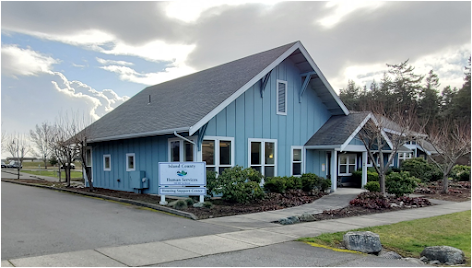
For
many years I have been meeting with a small group of friends to play cards. We
come from a variety of backgrounds, outlooks, and political perspectives. We
tease each other a lot, rarely talk politics, but we do discuss Island County
issues and concerns that strike us as important. Topics like the homeless, the
ferries, crime, traffic, visitors, the Navy, and local businesses. My objective
in writing this blog, grew out of these conversations. I seek to get
information from reliable sources for residents of Island County.
My first interview was with Rick Felici and Evan
Tingstad. Sheriff Felici manages the Island County Sheriff’s office, and his
staff responds to the calls that come in to his department via the Island
County Emergency Services Communications Center (ICOM911). His office is often
the first point of contact for issues related to public safety and they get
referrals from community organizations and individuals as well.
My second interview is with Behavioral Health
Manager/Clinical Supervisor, Kathryn Clancy. The behavioral health department
in which she works is under the umbrella of Island County Human Services. She
supervises staff who provide a variety of services for behavioral health
issues. Her staff are often the next point of contact for people in need.
Behavioral health is a blanket term that includes mental
health. The American Medical Association (AMA) website says that: “Behavioral
health generally refers to mental health and substance use disorders, life
stressors and crises, and stress-related physical symptoms. Behavioral health
care refers to the prevention, diagnosis and treatment of those conditions.”
We met on Friday, Feb. 24th, 2023 for an
interview. (M. = Mike Diamanti, K = Kathryn
Clancy.)
Initial
Points of Contact
M. My understanding of things is that deputies and
police officers often serve as the first point of contact with people who are
having behavioral health issues. When I look at the Island County Behavioral
Health-Outreach staff directory, I see people listed who work in Opioid
Outreach, as Jail Counselors, Co-Responders and Recovery Navigator Case Managers.
Could you elaborate a bit on this?
K. Well, to be frank, there’s an overlap with all our
services. But we do have specific jobs that people are responsible for, and I
thought what I could do is explain to you a bit about how we like to organize
it in our mind and in our work. I think that will speak to what you just talked
about in terms of the Sheriff’s office being the first contact for people with
behavioral health disorders. In a crisis situation, deputies and officers are
often the first responders, and for quite some time we’ve been working with
them, even before we had some of our programs with them, in terms of taking
referrals from them.
When they would come across someone who was having a
mental health crisis or a substance use disorder crisis, and they weren’t in
need of being arrested for a crime, we would reach out. We realized quickly that
there’s a model out there in the world that works quite well. It’s been called
different things, but essentially it’s having a mental health professional
along with a law enforcement officer going to the scene.
M. When did Island County start that?
K. We got that going in 2019. Richard West was our first
embedded mental health professional, but that program got interrupted by Covid.
Once we were able to start up again, he had moved on to another position, but
we realized that we really needed someone. He had been so busy with both the
Oak Harbor Police Department and the Island County Sheriff’s Office.
M. You wanted to replace him?
K. Yes, at a minimum.
We felt we needed two people. We fund one position ourselves with the one-tenth
of one per cent mental health sales tax funding. We asked for some additional funding
from the North Sound Behavioral Health Administrative Services Organization. They
are in charge of the crisis services for our five county region.
We realized that having two responders worked best in
our county due to our geographical challenge, and because we wanted to be able
to respond to referrals on our own, and not just with officers. Those were the
two challenges. The way the program works now, is that the Co-Responders are
housed at the Sheriff’s office and at the Oak Harbor Police Department. They
are asked to go out with officers on calls when needed, and respond to
additional referrals.
M. Do the responders go out on calls by themselves?
K. Yes, we realized it was difficult to be paired with
an officer all day because the officer would have to respond to different calls
and they might be needed elsewhere. So we decided that the Co-Responders would
each have their own vehicles. They respond in three ways: a planned ride-along
with officers/deputies, they go out on calls with officers/deputies when needed,
and respond themselves to referrals.
M. And when you say needed, is that when needed by the
officers or when needed via the referrals?
K. Both. The Co-Responders work for Human Services. But Amanda
Borman-Ballard responds to whatever the Sheriff’s office needs, and Christina
LeClaire responds to whatever the Oak Harbor police department needs. So, the
way it looks on a daily basis, they may go out on two or three calls with
officers, but they also respond to referrals. If an officer on nights or
weekends gets a call that the Co-Responders could help with, the Co-Responders
get a referral from those officers and they respond to those later – the next
day or later in the day.
M. In a medical setting, the triage system is often
used. (Triage refers to a preliminary assessment in order to determine the
urgency of the person’s need for treatment.) Is that what you are describing?
K. Absolutely. Both of our Co-Responders have mental
health and social work backgrounds, and they are both mental health professionals.
They bring a lot of knowledge about these areas that currently does not exist
in police departments. The Sheriff’s Office and the Oak Harbor police
department get a lot of mental health and substance use disorder calls, so the
expertise of the Co-Responders is really important.
Outreach
vs. Walk-Ins
M. What I often hear from people is: “What are the
police doing about the guy who is yelling and wandering around the Dairy Queen
in Oak Harbor?”
K. Many of the folks that they are talking about have
serious mental illness and substance use disorder. When we’re talking about
that sort of complicated combination, it’s difficult unless you’ve built a
relationship with that person to be able to help them. And that’s one of the
things that I think our programs are uniquely designed to do. A lot of
government entities and other counties in particular, are realizing that we
need people doing outreach. That’s part of the problem with the current mental
health system in our country. It’s built around coming in to the behavioral
health office and getting multiple assessments. For people who are having
challenges out in the street or with law enforcement, that model doesn’t work
for them. There are too many barriers in the world right now for people to get
the help they need.
M. We used to have walk-in clinics back in the 1970s and
early 1980s. We’re not going back to that model. So how do people get help now?
K. The laws are very strict when it comes to involuntary
detainment. And even when someone meets the criteria for that, the stay isn’t
very long. It’s just a basic stabilization stay. Unless there’s a plan upon
release, which quite often there isn’t, then they are back where they started
almost instantly. Our goal is to try to work with people so we can gain some
trust in understanding their situation and along with other community providers
help them move towards a more permanent outcome.
The Co-Responder program, the Recovery Navigator program,
and our other outreach programs help individuals work toward long-term,
positive outcomes. We have regular case management outreach, we have counseling
outreach, we have early childhood outreach where we go to people’s homes and
help them with parenting. I think these services, meeting people where they
are, are what helps create more of a long term solution.
Island
County Programs
M. I printed out the “Behavioral Health Resource Guide
for Island County, WA” and the quantity and variety of resources crammed onto
two pages is impressive. https://www.islandcountywa.gov/Humanservices/Behavioral-Health/Documents/2022%20Behavioral%20Health%20Resource%20Brochure.pdf
K. Yes, let’s look at all our law enforcement behavioral
health services; the Co-responders are one, the Recovery Navigator program is
one -- Bill Larsen is the program manager for the Recovery Navigator program –
you’re going to want to talk with him.
Jail
Programs
K. We also have several jail programs. Essentially it’s
three separate programs. We have a jail program where we have a mental health
professional who works in the jail seeing individuals Monday through Friday,
and that’s Laurel Brown. She does short-term and long-term counseling and daily
risk assessments, and she works very closely with the medical staff if there’s
any medication needs for people.
And then we have our RSAT Program, which is brand new,
and stands for Residential Substance Abuse Treatment. It’s a program that has
been around for awhile in prisons, primarily, because it’s up to a 90 day
inpatient program. So just like somebody would go to inpatient treatment for
30, 60, 90 days at a substance use inpatient treatment facility, it’s the same
in the jail. The people who are accepted into the program live in their own
separate “pod”.
They have their own separate expectations, and they
attend two substance use disorder treatment groups a day. Plus they get
individual substance use disorder treatment and mental health treatment. We
have a lot of things in that treatment program that essentially would be just
like if somebody was in an inpatient treatment center.
M. It seems that treatment would bring up the issues and
the pain that the person is going through, instead of just sitting in their
cell.
K. Absolutely, and the third program we have is the jail
transition program that we’ve had for many years, and that program has grown.
It started out with a half-time position and it’s grown to a full-time position.
Leif Haugen is the current jail transition coordinator. He works to assist
someone transferring out of incarceration. The service is open to anybody who
wants it, even if they are only there for a week. He can follow up for up to
six months after they are released. He sets up whatever they might need for
success.
A lot of times it’s housing, which you know is a
challenge. But it’s also other things like mental health treatment, substance
use disorder treatment. He can work with the folks in the jail to get the
assessments they need, or other things that might be a barrier when they are released.
M. I see the name Chelcee Lindell mentioned as the Jail
SUD Counselor.
K. She is now the Substance Use Disorder professional for
the RSAT program. She does most of the groups.
M. She seems like a passionate advocate for helping
people with recovery.
K. She is. She started out as a case manager for us and
became very interested in working in the jail. She took over the jail
transition position and then became a substance use disorder professional in
the jail.
M. Can you speak a bit about Jose Briones, who is the
Chief Jail Administrator?
K. He’s a great partner. We’ve always worked closely
with the jail, and his real insistence is that people are not just warehoused,
but that they have opportunities for programs. This has been really helpful and
made it easier for us to move forward.
District
Court Programs
M. What are some of the other outreach and connections
with the public?
K. Jacob Force is one of our outreach case managers. He
spends part of his time at District Court helping people get connected to
different services if that was their primary reason for being in court. Why is
this person appearing at court? Is it a substance use disorder? Is it a mental
health thing? Is it because they are homeless? Is it a combination? If it’s any
one of those social determinants of health, then Jacob will try to get them
hooked up with services on the front end.
M. And District Court consists of both Island County
District Court and Oak Harbor Municipal Court?
K. Correct. Both Judge Hawkins and Judge Costek are
great advocates and supporters of having behavioral health services available
in their courts. Jacob has also opened up the door with probation. He attends
probation hearings where somebody has violated probation. Why did they violate
their probation? Was it because they couldn’t get somewhere, or they couldn’t
afford an interlock device for their car? What is the barrier? Jacob will try
to help with those barriers. We’re trying to divert people out at various
different points.
M. So Island County Behavioral Health personnel are
trying to help people navigate a variety of systems that could help them?
K. Right. And in jail, once they are in the system, we
are trying to get them out permanently. After they are out, we want to get them
involved in the longer term services we have, like the jail transition, and our
Co-Responders work on post-jail situations as do many of our longer term case
managers who do a lot, especially with follow up.
The systems themselves, unfortunately, are so complex. I
mean, it’s a challenge for our folks to navigate the systems, let alone anybody
else who may have other challenges too, like homelessness. It’s very difficult to navigate the systems.
And so we do a lot of navigating those systems for people.
Some folks have fallen through the cracks at various
points and may end up back in the criminal justice system repeatedly. And
that’s what we’re really trying to prevent. Also, people who have a variety of
hospitalizations because of mental health issues. Permanent solutions are
tough, but they are there. It just
takes a lot of work.
Need
for Preventive Services
M. Sheriff Rick Felici said that he believes that 75% of
the people in the jail are there because of mental health related behaviors or
chemical issues. Do you think that’s a fair assessment?
K. It probably is. It might even be higher than 75%.
It’s not untrue that our jails in our country have become the quasi mental
health centers, mental health hospitals. And instead of just saying, well
that’s too bad, we have to work with what we have. We don’t have any mental
health hospitals anymore. We really need to figure out what we can do in the
future.
There are big ideas that would be helpful, that are very
costly. There are also changes in laws that need to happen, as well as other
things, to really solve the problem. Preventive services, in my mind, are key
to implement. But we are likely to get less funding for preventive services
than we do for any other services.
M. In Island County?
K. Just in general. We do have some prevention programs
for early childhood and youth and family that we work on, but again, just not
as much funding in those areas.
M. I hope to have another conversation with you about
other areas, for instance, Veterans Services.
K. Yes, we can talk about those services. And housing.
Housing is huge and our folks here know everything about housing in our county.
The Housing Support Center is in our office, which is the place that people
come to who are homeless or at risk of homelessness to get services.
But one of the things I want to mention is that we use a
model to conceptualize our services. It’s called the Sequential Intercept Model
(SIM). It really explains the different
intercepts for diversion, as I was mentioning. And many of the service
providers around the country use this model. These are folks who work with both
criminal justice and behavioral health. Intercepts for people can take place
before anyone is ever arrested.
We need somebody with law enforcement, we need somebody
at District Court, we need somebody at the jail, we need somebody for jail
transition, we need somebody helping people get into treatment.
Hospital/Emergency
Room Services
M. One of the things I hear from people is: Why do we
have to have so many people in government involved? It used to be that the
emergency room of a hospital was the point of entry.
K. That is still the case, but hospitals are different
now. Hospitals as well as emergency rooms are complex entities and
understaffed. Most services are funded by different and equally complex funding
models.
M. And that’s a huge shift that people didn’t notice
until it arrived.
K. Right
M. Can you speak to that?
K. We have a strong relationship with Debbie Ries, RN,
who is the Emergency Department Manager at Whidbey Health. Our hospital has
challenges that other hospitals don’t have. And partly because it’s a rural
hospital, and understaffed. Reimbursement rates and preauthorization from
insurance companies dictate medical services now, hospitals included. To
complicate matters, you may have people coming to the emergency room with
complex serious mental illness and/or substance use disorder as their primary
problem, and they are in crisis.
It’s difficult with not enough staff and not enough
social workers to manage it. Five years ago there were seven or eight social
workers on staff at Whidbey Health. Now there’s one and a half. And the social
workers they have are dealing with all the social work for patients, including
discharge planning. They’re worn very thin.
M. One of the things Sheriff Felici said was that the
emergency room often isn’t equipped or able to deal with the situation. I would
imagine that the referrals the police officers and deputies and Co-Responders
make are very important.
K. They are the staff who work with the hospital the
most. Both Amanda and Christina are working with the hospital and hospital
social workers constantly.
Our work with the hospital and other community partners
is all about our relationships with them. The relationships that we are
building through our different programs are helpful and successful. We are working
toward agreements between the hospital, the Designated Crisis Responders (DCR),
law enforcement, and other community providers so that we have protocol that
can be followed and can offer assistance when needed.
My
thanks to Kathryn Clancy for spending time with me explaining some of the
services Behavioral Health provides for those in Island County who need
assistance.